 Travel eSIMFaroe Islands
Eighteen islands in the North Atlantic, halfway between Scotland and Iceland: the Faroes belong to the Kingdom of Denmark but not to the European Union, so a European plan is roaming here at whatever your operator likes to charge. The islands themselves are superbly connected — tunnels under the sea included — and a travel eSIM puts you on that network at a fixed price.
Choose a planfrom $1.99
- 1 network
- 5G where available
- Installs in a minute
- Hotspot on some plans
- 14 plans

eSIM plans for Faroe Islands

Online when the clouds part
Flights land at Vágar, the only airport, forty-five minutes by road and sub-sea tunnel from Tórshavn; the ferry from Denmark docks in the capital itself. A hire car, a tunnel toll, a ferry booking to Mykines and a weather forecast: the trip starts on the phone.
- Before you travel: buy a plan and scan the QR code at home, on Wi-Fi. It takes about a minute.
- On arrival: switch mobile data to the travel eSIM and turn data roaming on for that line.
- Your own number stays active for calls and the SMS codes from your bank. WhatsApp keeps your usual number.

Better coverage than the map suggests
For a country of fifty thousand people scattered over steep islands, the network is remarkable. Tórshavn, Klaksvík, the villages, the main roads and even the sub-sea tunnels have strong 4G, and 5G across much of the inhabited land.
What remains are the places with nobody in them: the far sides of headlands, deep fjord ends and the long hiking routes, where a mountain stands between you and the mast. There the signal drops out — and the weather can turn in minutes. Save the route offline.

Tórshavn
One of the world's smallest capitals: turf-roofed Tinganes, the harbour, the ferry terminal. The strongest coverage in the islands.

Vágar
The airport island: the lake that hangs above the ocean, and Múlafossur falling into the sea at Gásadalur. Good signal at the sights, thinner on the trails between them.
Mykines
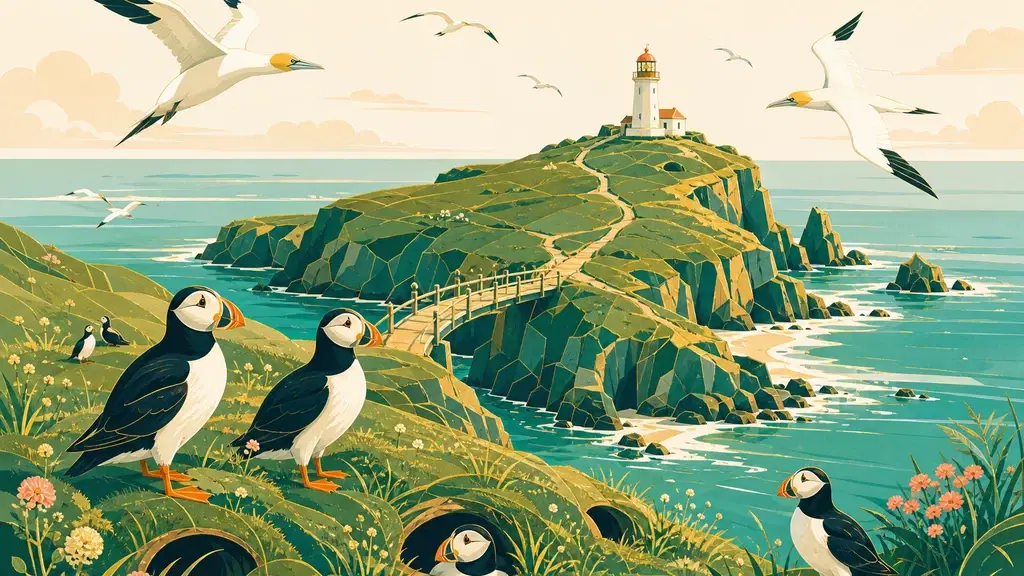
Puffins and a lighthouse at the edge of the map, reached by a small ferry that sails only in fair weather. Book ahead — and expect modest signal on the island.

The northern islands
Kalsoy, Kunoy, Viðoy: one-lane tunnels, steep ridges and the Kallur lighthouse. Covered in the villages; on the ridges, not always.
Faroe Islands: mobile networks
Faroese Telecom5G

Danish, but not the EU
The Faroe Islands govern themselves within the Kingdom of Denmark and stayed outside the European Union. EU roam-like-at-home rules do not apply, and even many Danish plans treat the islands as abroad. Operators differ — check the price list before you rely on it.
A travel eSIM runs on the local network and costs what it cost when you bought it.
The weather decides
Fog, wind and rain arrive without notice, and ferries and helicopters to the smaller islands are cancelled when they do. Check the forecast and the sailing status each morning, and keep a day in hand for the trip that matters most.
Download the hike before you start
Several of the famous walks cross private land and charge a fee, payable online. Buy the pass and save the map while you still have a full signal — the trailheads are exactly where it thins.
Faroe Islands: online in three steps
- 1Pick a plan and pay by card, Apple Pay or Google Pay.
- 2The QR code arrives by email straight away — scan it and the eSIM installs in about a minute.
- 3Land in Faroe Islands, switch mobile data over to the travel eSIM, and you are online.
Faroe Islands: questions before you buy
Are the Faroe Islands covered by EU roaming?
No. The islands are part of the Kingdom of Denmark but not of the European Union, so roam-like-at-home rules do not apply. Most European operators bill them as a non-EU destination.
Does a Danish plan work in the Faroe Islands?
It works by roaming, and whether that costs extra depends on the operator and the plan. The islands have their own networks, separate from Denmark's.
Is there mobile signal in the sub-sea tunnels?
Yes — the road tunnels, including the ones under the sea, are covered.
Will I have signal on the hiking trails?
Near villages and roads, usually. On longer routes and behind headlands it drops out, so carry offline maps and tell someone your plan.
Does the plan work in Denmark or Iceland?
No — it covers the Faroe Islands only. For a stopover in Copenhagen or Reykjavík, add a plan for that country or a regional Europe plan.
What currency do the Faroe Islands use?
The Faroese króna, equal to the Danish krone; Danish notes are accepted everywhere. Cards and phone payments work almost everywhere, including the tunnels' tolls online.
Going further?
Plans for the countries next door:


Destination guides
Where the signal is, how roaming treats the place, and what to know before you land.


